Friday, 15 May 2015

Friday, 27 February 2015
toyota gt-86 review

The Good
great value for money, brilliant handling, accurate steeringThe bad
Slightly gutless engine, cheap interior plastics, poor economy, cramped rear seatsOverview
lots of interior noise and cheap plastic interior materials, but we love the fact that the Toyota GT86 weighs only 1235kg. We’d like a bit more torque as the 2 litre engine has very little grunt at low rpm but we don’t want a turbo making it heavier or spoiling the response of the naturally aspirated motor. brilliant balance an handling and great fun to drive as long as you keep the rpm up. we think this car is a great buy for the price.Specs
bhp :
top speed : 155 mph
0-62 (mph) : 7.6 sec
cost : from £22,995
drivetrain : rear wheel dive
transmission : 6 speed automatic
engine : turbocharged 2.0 litre 4 cylinder boxer


The GT-86's rivals
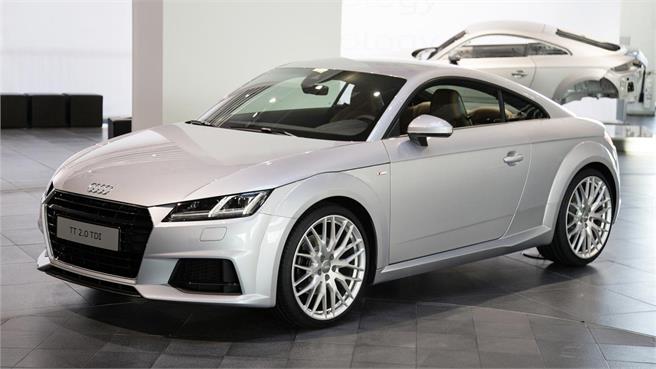
Audi TT


Nissan 370z
Friday, 6 February 2015
BMW i8 review

The Good
Stunning looks, low running costs, strong performance and low CO2 emissions.
The Bad
Cramped rear seats, road noise and small boot.
Overview
Featuring swan-wing doors, a shark-nose front end and a super car stance the i8 plug-in hybrid is BMW’s most revolutionary car in decades. There are 4 interior seats although the rear seats are a bit cramped. A turbocharged three-cylinder engine/electric motor duo with pa combined 357 hp delivers M3-like acceleration. A 155-mph top seed and Prius-like efficiency. Handling is agile and steering precise. The braking is great for any car let alone a hybrid. Overall it’s a truly impressive effort.
Specs
bhp : 357
top speed : 155 mph
0-60 (mph) : 3.8 sec
cost : $136,000
drive train : all wheel dive
transmission : 6 speed automatic
engine : turbocharged 1.5 litre 3-cylinder combined with 96 K plug in electric motor


The i8's rivals


Tuesday, 3 February 2015
How a car engine works (transmition)
Manual Transmission
Modern cars with manual transmissions usually have four or five forward speeds and one reverse, as well as a neutral position.

The gear lever, operated by the driver, is connected to a series of selector rods in the top or side of the gearbox.
The most popular design is the constant-mesh gearbox. It has three shafts: the input shaft, the layshaft and the mainshaft, which run in bearings in the gearbox casing.
The engine drives the input shaft, which drives the layshaft. The layshaft rotates the gears on the mainshaft, but these rotate freely until they are locked by means of the synchromesh device.
It is the synchromesh device which is operated by the driver, through a selector rod with a fork on it which moves the synchromesh to engage the gear

Clutch
The clutch , when engaged allows the engine's power to be interrupted from reaching the gearbox in order to select a new gear

Friday, 23 January 2015
How a car engine works (cylenders and pistons)

Pistons

V8
Pistons are what give a car its power, its bang.
Pistons are pieces of metal that move up and down the cylinders or holes that you can see above.
They move up and down on a shaft like the one shown below.
The shaft rotates.

As the piston moves up the cylinder is filled with a mixture of fuel and air with injectors like the one shown below.
There are usually 2 injectors per cylinder.
There are usually 2 injectors per cylinder.

Then as the piston moves back down the fuel, air mixture is compressed and a small explosion happens.
These explosions can happen up to 8,000 times a minute in a road car from the combined pistons so the pistons can move very fast.
Subscribe to:
Comments (Atom)